Last updated on
Every interior designer working in hospitality knows the uncomfortable moment when a beautiful scheme meets the reality of a working venue. The mood board looks flawless. The renders are seductive.
Then the operator asks how the seating will hold up after five hundred functions, whether the chairs stack, how quickly a damaged one can be replaced, and whether the whole range will still be available in three years when the second phase opens.
Good design in this sector is not just about how a room looks on opening night. It is about how it survives the brief.
Table of Contents
Balancing Aesthetics with Endurance
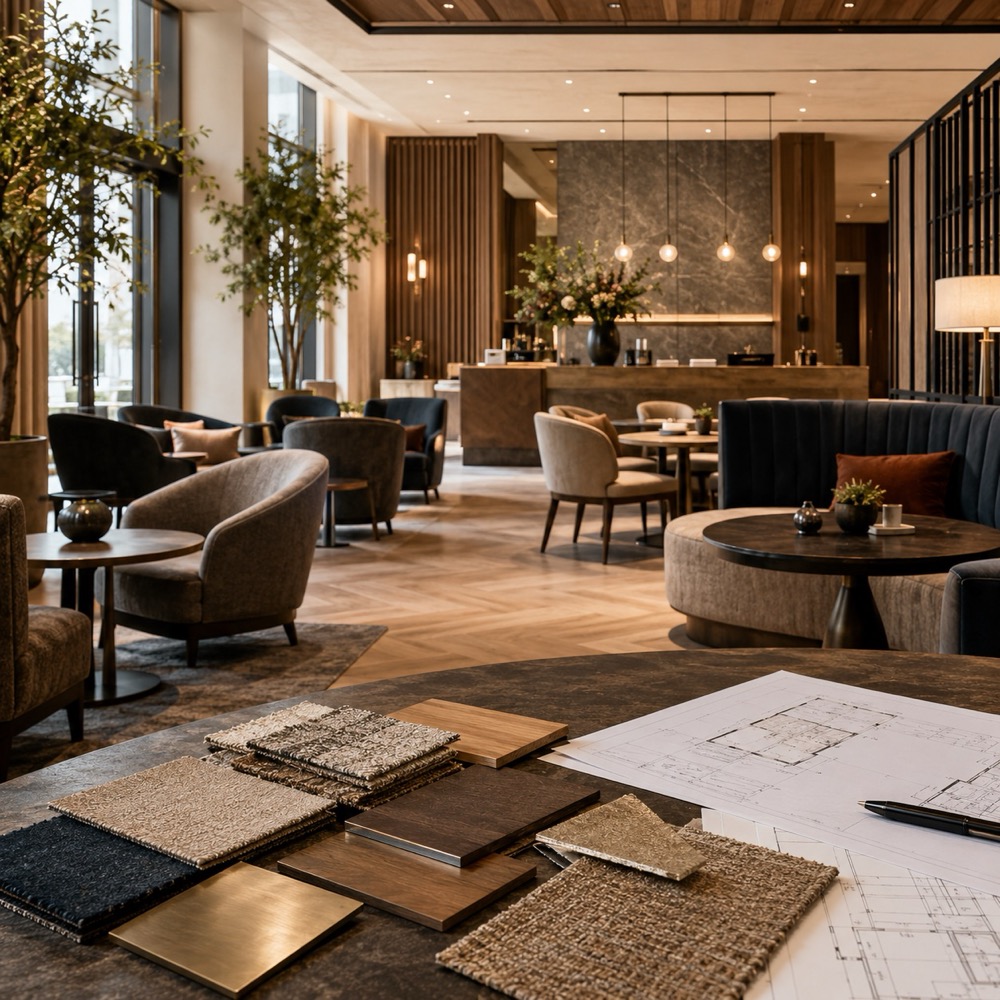
That tension between aesthetics and endurance sits at the heart of specifying for hotels and event spaces. A residential project can prioritise the perfect object almost without compromise. A banqueting suite cannot.
The pieces have to earn their place by performing under conditions that would destroy domestic furniture within months, while still delivering the visual language the scheme depends on. The designers who thrive in this space are the ones who learn to read a product’s engineering as carefully as its outline.
Looking Beyond the Catalogue Image
This is why sourcing decisions increasingly begin with the manufacturer rather than the catalogue image.
When a designer specifies hotel furniture for a contract environment, the questions that matter are whether the frame has passed structural and fire testing, whether the finish can be matched again for future orders, and whether the maker can produce bespoke variations without abandoning the tested construction underneath.
A supplier who can answer all three confidently removes an enormous amount of risk from the project.
The Value of Bespoke Contract Furniture
Bespoke capability has become a genuine differentiator. The best British contract makers now run a design service that begins with a client brief, moves through CAD drawings and renders, and ends with physical samples before anything goes into production.
For a designer, this changes the relationship entirely. Rather than bending a scheme to fit an off-the-shelf range, they can develop a chair or table that answers the concept precisely, confident that the finished piece will still meet the durability standards the venue requires.
The creative freedom of custom work, without sacrificing the engineering, is a powerful thing to offer a client.
Matching Furniture to Its Setting
Colour, texture and proportion still lead the conversation, of course. A dining chair for an all-day restaurant needs a different presence from a banqueting chair built to stack a hundred high in a store cupboard.
Lounge seating in a hotel lobby carries the first impression of the entire property and has to look considered while withstanding constant, careless use.
Matching the right form to each of these settings is the visible craft of the job. What separates a scheme that ages gracefully from one that looks tired within a year is the invisible craft beneath it.
Planning for Replacements and Future Phases
Availability over time is the detail inexperienced specifiers most often overlook. Hotels rarely furnish everything at once, and they almost never stop needing replacements.
Choosing a range from a maker with deep, consistent production means a property can add matching pieces years later, keeping a room coherent as it evolves.
Specify a fashionable import that vanishes after two seasons and the designer has handed the operator a slow-motion problem that surfaces long after the final invoice is paid.
Designing Furniture Schemes That Last
There is a quiet professional satisfaction in getting this balance right. The rooms that photograph beautifully and still feel solid a decade later are the ones where the designer resisted the temptation to chase the object and instead chose the piece that could carry both the concept and the load.
In hospitality, the furniture is the part of the design guests actually touch, sit in and lean on, hour after hour. Specifying it well is not a compromise on creativity. It is the discipline that lets the creativity last.
Related Posts
 The Flat Truth: Why Great Interiors Begin at Floor Level
 The Journey of Authentic Buddha Statues from Asia
 What Is the Best Canada Coffee Subscription for Fresh Roasts?
 Commercial Plumbing Contractors: Infrastructure for Business Operations
 Top Corporate Gift Ideas To Impress Employees And Strengthen Workplace Appreciation