Last updated on
Commercial buildings operate under fundamentally different demands than residential properties.
A restaurant’s grease trap system, a hospital’s medical-grade water lines, and an office tower’s multi-floor drainage network each require specialized knowledge that extends far beyond basic pipe repairs.
Scale, complexity, and regulatory requirements transform plumbing from utility work into infrastructure engineering.
Table of Contents
System Complexity and Capacity Planning
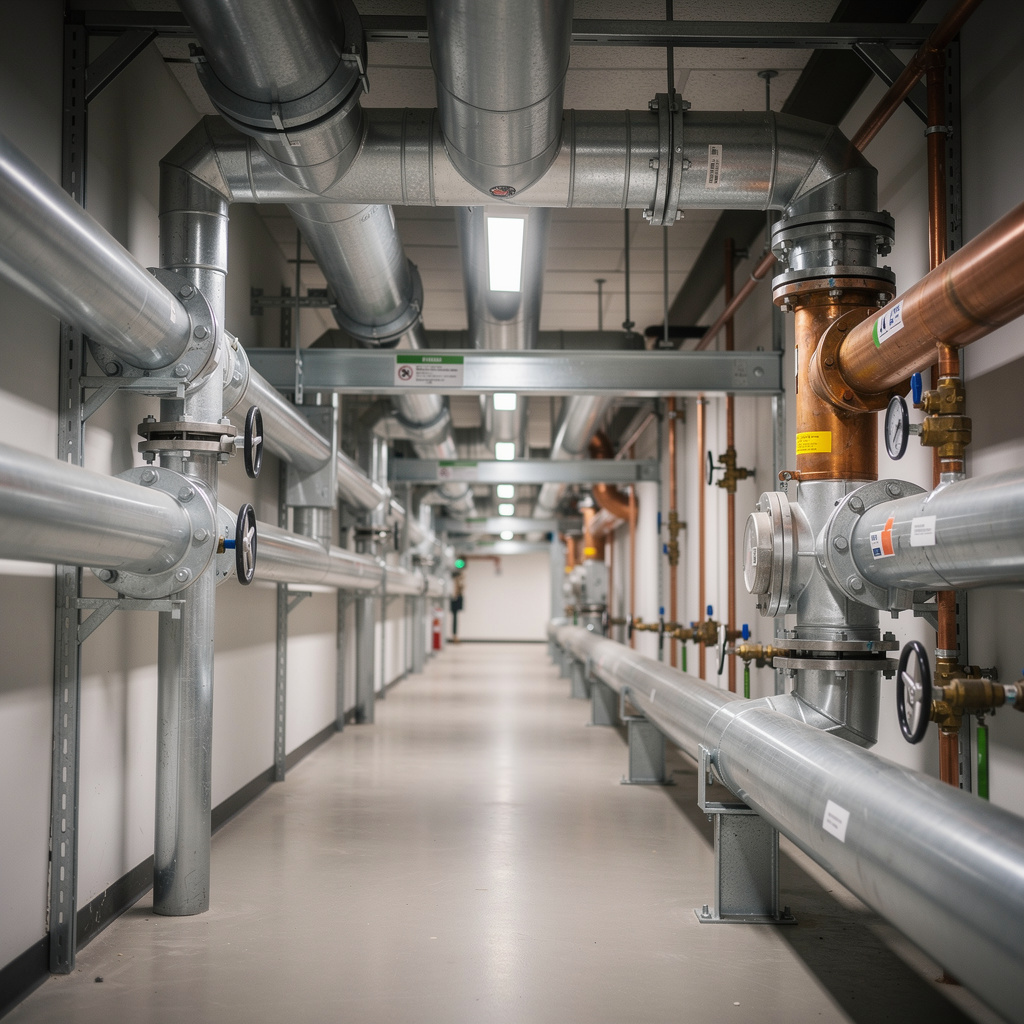
Commercial facilities serve dozens to thousands of daily users, creating peak demand scenarios that residential plumbing never encounters. Calculating fixture units, sizing supply lines, and designing drainage systems requires understanding occupancy patterns, usage cycles, and building codes governing minimum capacities. POM Plumbing engineers assess these variables to prevent undersized systems that create backups during peak hours, while avoiding oversized installations that waste resources and complicate maintenance.
Multi-story buildings introduce vertical distribution challenges. Pressure regulation becomes critical — upper floors need adequate pressure while lower floors must avoid excessive force that damages fixtures. Pressure-reducing valves, zone isolation, and strategic pump placement maintain consistent delivery across elevation changes.
Regulatory Framework and Code Compliance
Commercial plumbing operates under stricter oversight than residential work. Health codes govern backflow prevention, particularly in food service and healthcare settings where contamination risks demand redundant safeguards. Commercial plumbing contractors must navigate CSA standards, local building codes, and industry-specific regulations that vary by facility type.
Accessibility requirements mandate specific fixture heights, clearances, and configurations in public restrooms. Fire suppression integration connects plumbing systems to sprinkler networks, requiring coordination with fire safety engineers. Grease interceptors in restaurants need proper sizing and maintenance schedules meeting municipal discharge standards.
Preventive Maintenance and Emergency Response
Commercial downtime costs multiply exponentially compared to residential inconvenience. A burst pipe in a retail store doesn’t just create cleanup work — it forces closure, spoils inventory, and drives customers to competitors. Scheduled inspections, predictive maintenance, and rapid response protocols prevent minor issues from escalating into operational crises.
Water heater systems in hotels or gyms require redundancy — backup units ensure continuous service during maintenance or primary system failures. Drainage pumps in below-grade facilities need monitoring systems alerting managers to potential malfunctions before backups occur. Companies like pomplumbing.ca structure maintenance agreements around business-critical timelines, performing work during off-hours to minimize disruption.
Specialized System Requirements
Different commercial sectors demand unique plumbing solutions. Restaurants need high-capacity hot water for dishwashing, grease management systems preventing sewer blockages, and floor drains handling heavy washdown. Experienced contractors at POM Plumbing understand these sector-specific requirements, tailoring installations to operational realities. Medical facilities require temperature-controlled water preventing Legionella growth, separate supply lines for different departments, and specialized waste handling for laboratory effluent.
Retail spaces balance public restroom capacity with back-of-house utility needs. Office buildings integrate water features, cooling tower makeup lines, and kitchen facilities supporting tenant amenities. Each application requires tailored approaches, not generic installations.
Technology Integration and Efficiency
Modern commercial plumbing increasingly incorporates smart monitoring. Flow sensors detect leaks in real-time, temperature monitoring ensures compliance with health regulations, and automated shutoffs prevent catastrophic failures during off-hours. POM Plumbing integrates these monitoring systems to generate data informing maintenance schedules and identifying efficiency improvements.
Water conservation measures reduce operational costs while meeting sustainability targets. Low-flow fixtures, graywater systems, and rainwater harvesting adapt commercial buildings to evolving environmental standards. However, retrofits must maintain adequate performance — savings mean nothing if user experience suffers or health codes are violated.
The Takeaway
Commercial plumbing contractors bridge technical expertise with operational understanding. They design systems anticipating peak loads, maintain infrastructure supporting business continuity, and respond to emergencies minimizing downtime. In commercial contexts, plumbing isn’t background infrastructure — it’s a business-critical system requiring professional management, strategic planning, and reliable execution.
Related Posts
 The Journey of Authentic Buddha Statues from Asia
 What Is the Best Canada Coffee Subscription for Fresh Roasts?
 Top Corporate Gift Ideas To Impress Employees And Strengthen Workplace Appreciation
 Top Design Mistakes That Make Homes Feel Smaller (and How to Fix Them)
 The Walls Along Your Stairs: Decorating the Vertical Canvas